Accepting New Patients | Virtual Consultations Available

High-Risk Breast Program in Los Angeles
Reviewed by Elizabeth Arena, MD, FACS.
Having a higher risk of breast cancer does not mean that cancer is inevitable, but it may mean that routine screening alone is not enough. Dr. Elizabeth Arena offers high-risk screening in Los Angeles to help patients understand how family history, genetic mutations, dense breast tissue, previous breast conditions and other factors affect their individual risk. She then develops a proactive plan that may include genetic testing, clinical breast exams, mammography, breast MRI and ultrasound to support earlier detection and informed decisions about prevention.







Who is considered high risk for breast cancer?
You are considered high risk if a risk model puts your lifetime chance of breast cancer at about 20% or more, or if one of the high-risk criteria applies to you.[1] About 13% of women in the general population develop breast cancer during their lifetime, compared with more than 60% of women who inherit a harmful BRCA1 or BRCA2 mutation.[3]
Criteria that put you in the high-risk group
- An inherited gene mutation: BRCA1, BRCA2 or another high-risk gene such as PALB2, or a mutation that causes an inherited cancer syndrome: Li-Fraumeni syndrome (the TP53 gene), or Cowden or Bannayan-Riley-Ruvalcaba syndrome (both the PTEN gene). Men with a BRCA2 mutation also have a higher risk.[1][3]
- A parent, sibling or child with a BRCA mutation: if you have not been tested yourself, Dr. Arena schedules the same screening as for a mutation carrier until your own result is back.[1]
- Radiation to your chest before age 30: most often given for Hodgkin lymphoma.[1]
- A personal history of breast cancer: if it was diagnosed before age 50 or you have dense breasts.[2]
Findings that call for a formal risk assessment
- Family history: breast cancer in a close relative at 50 or younger, or ovarian or male breast cancer in the family.[3]
- Ashkenazi Jewish ancestry: BRCA mutations are more common in this group, so it is a reason for genetic testing.[3]
- Atypical cells or lobular carcinoma in situ on a breast biopsy: atypical ductal hyperplasia, atypical lobular hyperplasia and lobular carcinoma in situ (LCIS) are not cancers, but each raises your risk and the American College of Radiology recommends considering breast MRI.[2]
Factors that raise risk without making you high risk on their own
What happens at your first high-risk visit?
-
Family and personal history
Dr. Arena records every cancer on both sides of your family, with the age at diagnosis, along with your own biopsies, any chest radiation and any hormone therapy.
-
Breast exam
She examines both your breasts and the lymph nodes under your arms and above your collarbones.
-
Ultrasound in the office
If the exam or a recent mammogram shows an abnormal area, she scans it with breast ultrasound at the same visit.
-
Risk calculation
She enters your family's cancers and your own history into a risk model such as Tyrer-Cuzick, which estimates your chance of breast cancer over the next 10 years and over your lifetime.
-
Genetic testing
If your history meets testing guidelines, she takes a blood or saliva sample in the office for genetic testing.
-
Your screening plan
She lists which scans you need, how often and the month each one is due.
If your test finds a mutation, your parents, brothers, sisters and children can have a simpler test for that one mutation. A negative result does not mean your risk is average: if your family history alone puts your lifetime risk at 20% or more, you still need high-risk screening.[3]
If you have a new lump or another breast change now, Dr. Arena examines and scans that area first; see what to do after finding a breast lump.
How often is high-risk screening done?
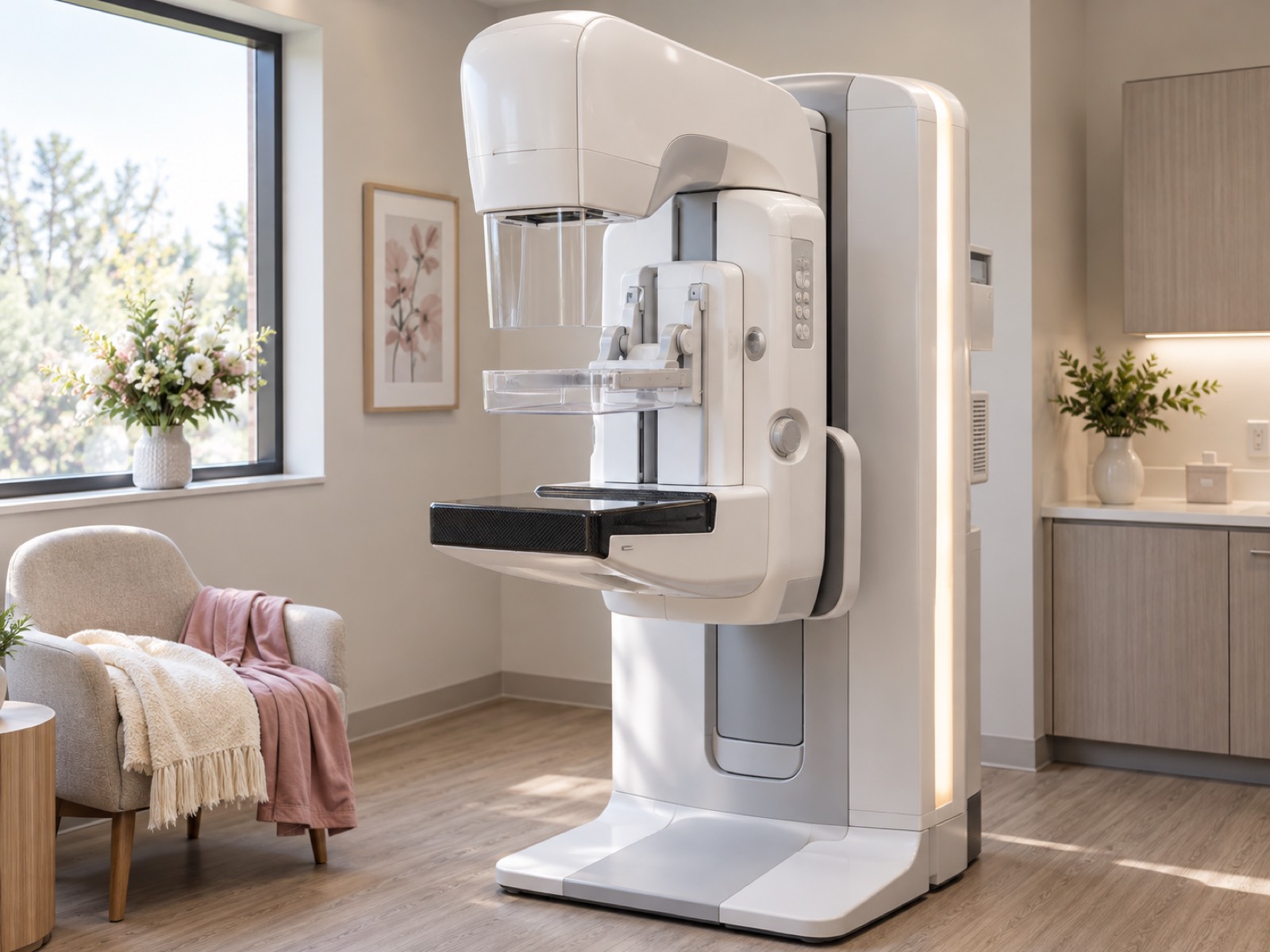
A yearly breast MRI and a yearly mammogram are the core of high-risk screening.[1][2] Dr. Arena schedules the two about six months apart at an imaging center and she sees you for a breast exam every 6 to 12 months.
| Test | What it shows | How often | When it usually starts |
|---|---|---|---|
| Breast exam by Dr. Arena | Lumps, skin or nipple changes and enlarged lymph nodes under your arms | Every 6 to 12 months | At your first visit |
| Breast MRI with contrast | Both breasts in detail after a contrast injection; it finds more cancers than a mammogram does in women at high risk, including those with dense breasts[2] | Once a year | Between ages 25 and 30[2] |
| Mammogram, including 3D mammography (tomosynthesis) | An X-ray of each breast, which shows calcium deposits (calcifications) that can be an early sign of cancer | Once a year | Age 30[1][2] |
| Breast ultrasound in the office | Whether a lump or area is solid or filled with fluid | When an exam or scan shows an abnormal area | Any age |
If you cannot have an MRI, for example because you have a pacemaker, severe claustrophobia or an allergy to gadolinium (the MRI contrast dye), Dr. Arena orders one of two alternatives:[2]
- Contrast-enhanced mammography: a mammogram taken after an injection of iodine contrast dye.
What happens if your screening results are abnormal?
Once Dr. Arena has received the report from the radiologist, she checks it against your previous MRI and mammogram images.
If a report shows an abnormal area:
- Ultrasound: if the area can be seen on ultrasound, she scans it in her office, usually at the visit where you discuss the report.
- Biopsy: if the area still looks abnormal, she arranges a needle biopsy guided by ultrasound, MRI or mammogram, or removes the area in an excisional biopsy.
Can you lower your risk of breast cancer?
While medication that blocks or reduces estrogen lowers your chance of hormone-sensitive breast cancer, a preventive mastectomy is still the most effective way to lower your overall risk.[5][6] You can take the medication and keep your yearly MRI and mammogram.
| Option | What it involves | Effect on your risk |
|---|---|---|
| Screening | A yearly MRI and a yearly mammogram, with breast exams | No change to your risk; it is meant to find a cancer early |
| Risk-reducing medication | A daily pill: tamoxifen before or after menopause, or raloxifene or an aromatase inhibitor (a drug that lowers estrogen) after menopause; taken in studies for 3 to 5 years[5] | Lowers the chance of hormone-sensitive breast cancer, the type that grows in response to estrogen. Side effects include hot flashes; blood clots with tamoxifen and raloxifene; uterine cancer with tamoxifen; and bone loss and joint pain with aromatase inhibitors.[5] |
| Preventive (risk-reducing) mastectomy | Dr. Arena removes nearly all the breast tissue from both your breasts, often as a nipple-sparing mastectomy, with reconstruction in the same operation, later, or not at all | Lowers your risk by at least 95% if you carry a BRCA1 or BRCA2 mutation and by up to 90% with a strong family history[6]; a small risk remains because no operation removes every breast cell[3] |
Some women have screening for years and choose preventive mastectomy later, for example after they have finished having children.
Why choose Dr. Arena for high-risk breast care in Los Angeles?
- Double board certification: Dr. Arena is double board-certified in general surgery and complex general surgical oncology and a Fellow of the American College of Surgeons.
- Testing at her office: she takes your genetic test sample and performs your breast ultrasound at the office, so you do not book a separate lab or imaging appointment for either.
- Your choice of imaging center: she orders MRI and mammograms at more than one imaging center, so you can use the one that suits you.
- Risk-reducing mastectomy: she performs nipple-sparing mastectomy and aesthetic flat closure (mastectomy without reconstruction).
Care for patients with high risk for breast cancer is an ongoing strategy that should evolve with your health, family history and screening results. As a double board-certified surgeon in general surgery and complex general surgical oncology, Dr. Arena brings a specialist’s perspective to both surveillance and prevention. She looks at the full picture to recommend the appropriate level of monitoring, investigate concerning findings and, when necessary, discuss risk-reducing options such as nipple-sparing mastectomy. Her approach gives patients continuity of care and a clear path forward, whether they need closer screening, further evaluation or preventive surgery.
Frequently asked questions
What makes someone high-risk for breast cancer?
A lifetime risk of about 20% or more on a risk model, an inherited mutation such as BRCA1 or BRCA2, a close relative with a BRCA mutation when you have not been tested, radiation to your chest before age 30, or a personal history of breast cancer diagnosed before 50 or with dense breasts.[1][2] Dr. Arena enters your family history into a risk model at your first visit.
When should you start screening if you are high risk?
Does insurance cover high-risk screening and breast MRI?
Screening for patients who meet high-risk criteria, including breast MRI, is generally covered. Our office assists with authorization and benefit verification.
What happens if you test positive for a BRCA gene mutation?
Dr. Arena starts yearly MRI screening, with yearly mammograms from age 30, if you are not having them already and explains risk-reducing medication and preventive mastectomy. A BRCA mutation also raises ovarian cancer risk, so she refers you to a gynecologic surgeon to discuss removing your ovaries and fallopian tubes. Your close relatives can have genetic testing for the same mutation.[3]
Sources
- American Cancer Society. American Cancer Society Recommendations for the Early Detection of Breast Cancer. https://www.cancer.org/cancer/types/breast-cancer/screening-tests-and-early-detection/american-cancer-society-recommendations-for-the-early-detection-of-breast-cancer.html
- Monticciolo DL, Newell MS, Moy L, et al. Breast Cancer Screening for Women at Higher-Than-Average Risk: Updated Recommendations From the ACR. Journal of the American College of Radiology. 2023. https://doi.org/10.1016/j.jacr.2023.04.002
- National Cancer Institute. BRCA Gene Changes: Cancer Risk and Genetic Testing. https://www.cancer.gov/about-cancer/causes-prevention/genetics/brca-fact-sheet
- Centers for Disease Control and Prevention. Breast Cancer Risk Factors. https://www.cdc.gov/breast-cancer/risk-factors/index.html
- US Preventive Services Task Force. Breast Cancer: Medication Use to Reduce Risk. 2019. https://www.uspreventiveservicestaskforce.org/uspstf/recommendation/breast-cancer-medications-for-risk-reduction
- National Cancer Institute. Surgery to Reduce the Risk of Breast Cancer. https://www.cancer.gov/types/breast/risk-reducing-surgery-fact-sheet
Speak with Dr Arena about your next step
Whether you have a new diagnosis, want another opinion, are weighing surgical options or need a concerning finding assessed, the first step is a consultation focused on your specific situation.
After you submit the request, the office will contact you to confirm the appropriate consultation and the records or information needed.
Map preview loads on request